On Poets Writing Novels
The primacy of the novel in the literary imagination is seldom disputed—not even among poets, who seem lately to be trading up in confirmation. A short list of crossovers includes Kaveh Akbar, Aria Aber, Ben Purkert, Ruth Madvesky, and Will Brewer, among others—all celebrated millennial poets, with one or several collections each. The young poet writing a novel today owes a debt to Ben Lerner, who practically set the whole field in motion—providing a model for crossing over that doesn’t wholly sacrifice the poet’s lyric investment in the self. Of course, I am talking about what critics call autofiction—specifically the “auto” part—which extends an invitation to blur lines and muddy reality in ways no doubt familiar to poets.
New to fiction, these poets, while projecting autobiographical elements, are doing something slightly different. They are giving the people what they want: highly readable novels with conventional, MFA-stamped characters—commercial nods to an in-crowd of creative writing peers and others who constitute the market for consumption of fiction, poetry, and other literary forms. Even as they bleed aspects of themselves into their fictional worlds, it is notable how they largely respect genre boundaries, that the experiment is how successfully they can write what they know while also performing the conventions of verisimilitude unique to the novel form. Keen to climb the mountain of the novel, the exercise becomes one of coloring inside the lines, of keeping to the well-trod path. Not all these crossover debuts managed realism’s demands so well, and so find their compensations in the poetic. This recalls William Hazlitt’s longstanding critique of poets attempting prose—that “the prose-writer is master of his materials: the poet is the slave of his style.”
As we look to content, we see that these books give you characters you might recognize in the urban cultural environs of New York City or Los Angeles, others aesthetic or spiritual investigations of one sort or another. One is described as “a portrait of the artist as a young woman set in a Berlin that can’t escape its history”; another depicts “a once-promising young writer” who “agrees to ghostwrite a famous physicist’s memoir,” is “plagued by debt” and “haunted by an overwhelming sense of dread he describes as the Mist;” a third follows a “newly sober, orphaned son of [an] Iranian immigrant, guided by the voices of artists, poets, and kings,” who “embarks on a remarkable search for a family secret that leads him to a terminally ill painter living out her final days in the Brooklyn Museum.”
The features of millennial culture—angst, art, identity; or, more accurately, angst about art and identity—come through loud and clear. But the debut novel is rarely a site of mastery—let alone of materials that more than hint at its own impossibility. Instead, the poet-novelist takes to the loose-fitting form of the Künstlerroman, the “artist’s novel,” and inflects it further with the sentence-level devices of poetry—a prose often inflated with what Hazlitt once called “common-place ornaments” or “pleasing excrescences” aimed solely at “captivating the reader.” For several of these poets, the tendency is much the same. Deeper truths about their subjects elude, as the tradeoff becomes one of insight for a kind of purple discursivity. To my mind, the results fit with what Brittney Allen describes as the “millennial midlife crisis novel,” only the crisis is forever unresolvable and, worse, self-defeating. Here is how Aria Aber’s debut Good Girl begins: “I had been lifted out of the low-income district of hopelessness and sent to one of the best schools in the country, and yet here I was, my mother was dead, soon the city would be covered in snow again, and I was ravaged by the hunger to ruin my life.”
What you find on the page are characters and situations that do more than betray the prevailing formulae of so-called literary fiction: they fail to break free of the expectations of autofiction that make the author the primary object of fascination. It starts with the characters, who are copied over from the professional and cultural milieus of their authors—and, consequently, possess many shared biographical details. The authors, in turn, must account for the overlapping likeness on the requisite book tour. That poets themselves are often conflated with the voices in their poems—indeed, that many poets are happy to be so—only intensifies the identification. The poet becomes speaker, becomes novelist-protagonist—the book tour a celebrified lecture series on the circular topic of novel-writing as self-promotion. Peppered with questions less to do with the text than with the authors’ own lives, they become less accountable to the books than their own careers. The anticipation of the content of the public fora, it seems to me, makes their books possible in the first place.
As authors grow their brands, poetry—that reservoir of pure thought and sensuousness whereby a writer can reach for ostentation when they need it—provides a certain marketability that paradoxically puts symbols to good practical use, if only to provide further embellishment to the already overdone and oversold millennial art novel. The results are books that have returned to a kind of symbolism: they instantiate a new alchemy of literary credentialism. Poets are so in! the marketing departments in the publishing houses seem to be saying. And they’re not wrong, as these books inevitably read as though they “channel the norms of a publishing system,” as the critic Dan Sinykin puts it, as well as “its sense of literary value.” They’re interesting in the way the artisanal cakes look from behind a baker’s display case. They don’t so much as disappoint as deliver on the promise of a passable, pragmatic—commercially speaking—but ultimately forgettable work. It’s that sense of letdown in getting exactly what you paid for—of thwarted satisfied expectations.
***
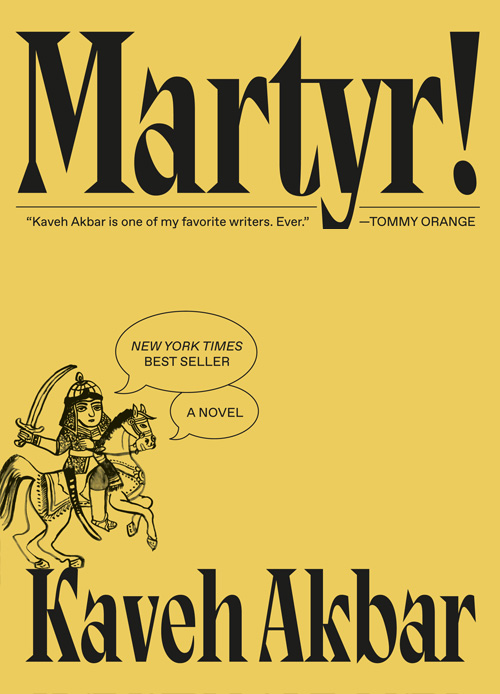
Kaveh Akbar is arguably the most successful genre transplant in his group. His poetry, from Portrait of the Alcoholic to Pilgrim Bell, is concerned with clearly identifiable themes (alcoholism, religious heritage), delivered in a style that blends elements of contemporary verse (punchy metaphors and bold juxtaposition) with the brazenly sentimental and unapologetic populism of slam poetry. On the page, it’s hard to know which elements are camouflaging which in Akbar’s poetry. An early Button Poetry alum with an unmistakable penchant for in-the-flesh theatricality, Akbar’s star power in contemporary poetry is that curious case of talent and force of personality meets the present identity- and protest-inspired zeitgeist meets something like target audience marketing in an outcome so far removed from the substance of the text itself that the writer becomes the locus of an interlinked set of vested interests—a charismatic surrogate for the ideas and tastes of corporate publishers. After three lauded poetry collections, the novel was the logical next step (his “Art is where what we survive survives” was just a hair’s breadth, one felt, from David Foster Wallace’s “Fiction’s about what it is to be a fucking human being”).
To my mind, Martyr! draws its resonance from a collision of identity positions that are contemplated throughout—bisexual, artist, alcoholic, orphan, Iranian-American. The book’s apparent risk lies in the very rejection of the modern world and its “checkbox” society. (One could also argue that, absent such checkboxes, the book’s jacket copy would be greatly diminished.) Cyrus Shams, the protagonist, is a voluble, twitchy thirty-something hopelessly wed to his identity as a poet and, seemingly as a result, can’t help but “elaborate everything in everybody’s face,” to invoke A.R. Ammons. Only, he’s very likely clinically depressed, and has a tendency to storm out on people close to him (his AA sponsor, for example). His obsession with the concept of martyrdom after the death of his parents, of making his death meaningful, gives the book its heady forward momentum. The anti-imperialist subtext, subtle as it is, helps to frame all of this; but even the trope of resistance, expressed in the vernacular of millennial resignation, is so banal as to be passed over by reviewers, who were predictably charmed by the poet’s shiny sentences. “The novel itself is almost violently artful, full of sentences that stab, pierce, and slice with their beauty,” reads a review of the book in the New Yorker. I get where it’s coming from: Akbar doesn’t miss the opportunity to polish off a paragraph with a metaphor or simile, putting the pen down in places much as the poet would at the end of a stanza—often to excess. Between the luxuriant excrescences of the poet describing the Brooklyn skyline or the “vaguely orientalist” interior of a hookah bar, a line or two—a passage or chapter—provides glimpses into a prose harmony befitting what Laynie Browne calls “the poet’s novel.”
But the rest of the book, in those arenas foreign to the poet, takes on the quality and tone of Twitter discourse in its wounded, righteous posture—full of characters who say things like “Fashion is a capitalist weapon” and “Do you worry … about becoming a cliche? Another death-obsessed Iranian man?” and who think thoughts like “Cyrus also worried that the whole idea of gratitude was possibly classist, or worse.” And for a novel that purports to address suicidality, Akbar’s writing about the subject is often, despite his best efforts, maudlin to the point of cliche. We see this in a recurring expository mode recursively fixated on the self. The frequency is deadening: “Most of what Cyrus felt was empty. A crushing hollowness, which governed him. He should have died on the plane with his mother, but he’d been left home.” Then, near the end of the book: “Cyrus felt annihilated. Furious. He felt angry for his sweet sick dead father. He felt angry for himself. Then at himself, for feeling angry instead of something more enlightened: acceptance, or perhaps compassion. That’s where he quickly settled, the vector his rage, his hurt, pointed directly back at himself.”
Even if this is part of the conceit, the catharsis that predictably awaits Cyrus at the end of the novel (“that he was not at all made for the world in which he lived, that art and writing had gotten him only trivially closer to compensating for that fundamental defectiveness”) is hardly convincing after so little evidence of growth. Indeed, it reads as overcompensation for pages upon pages of jaded complaint and self-loathing. At some point, the author’s pressing on the misery accelerator becomes less a tic than a choice—one that is exactly opposite to what it purports to represent in the novel: an all-consuming, circumstantially appropriate despair, depression’s feedback loop, “the mind of the addict.” But it is shoved down our throats with a monotony often disguised as earnestness—and for that fact, it is difficult to sympathetically identify with Cyrus. The reader’s labor is simply tolerating him.
Religiosity, then, provides relief at the flip of a switch. Conscious of the effects of the dead-end interiority he’d committed to, Akbar imposes a mystical register intended as something of an inverse to complete solipsistic self-annihilation—the invasion of the poet in the mode of prayer, parable, and dreaming. The dream sequences, interludes that feature conversations between pop cultural and historical figures, such as Kareem Abdul-Jabbar, Beethoven, and Rumi, nevertheless betray a singular psychology: that of Cyrus, or Akbar, or the “narrator,” and so feel shallow (imagine Rumi, blunt in hand, saying: “Shit, where are my manners—you want some of this?”). These exercises in style, which come off as overindulgence and fetishism posing as “experimentation,” might explain the lack of compelling character psychology writ large—and why epiphany and catharsis, then, have to be shoved through in the form of cosmic coincidence, reversal, or surreal speculation.
But Akbar might have us bracket our complaints about these mere peccadillos in order to contemplate the larger theme: the necessary sacrifices of art, and the “grace” in turning against them to embrace living imperfectly—with perhaps the book itself as testament. It is a nice sentiment, and seemingly a feature of the Künstlerroman, which “dramatize[s] the author’s formation and inscribe[s] the creation of the novel on the book itself,” writes critic Christian Lorentzen. But this maneuver doesn’t persuade if it can be used to dismiss the author’s aesthetic failings, which are present in these sweeping stylistic gestures that lend an appearance of formal risk-taking. Rather than engage his subjects, Akbar repackages the malaise of his generation and presents it as stylized helplessness, leaving us no better off. Take, for example, his attempt to parody the ascension of Donald Trump, which manages only an empty flourish of poetic extravagance: “Only in a culture that privileged infallibility above all else could a man like President Invective rise to power—a man insulated since birth from any sense of accountability, raised in a pristine cocoon of inherited wealth to emerge pristine, dewy, wholly unsullied by those irksome mortal foibles, grief and doubt.”
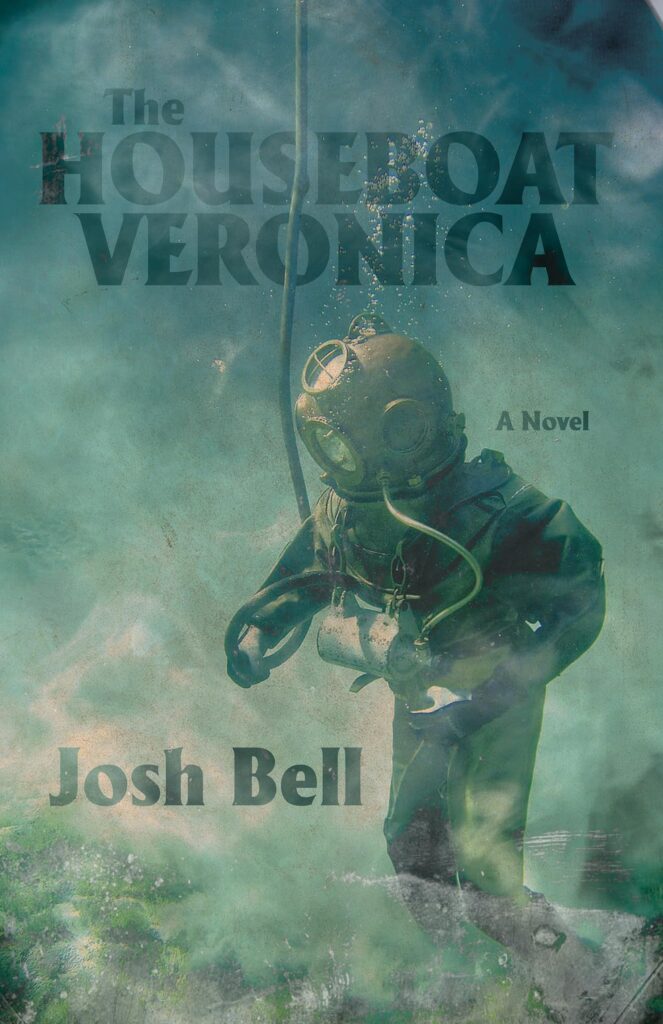
Another recent novel by a poet provides a ready contrast in style and substance—an example of a sensibility that successfully crosses all the wires in pursuit of prose pleasure. Enter Josh Bell’s debut novel The Houseboat Veronica, a mythopoetic peep show involving a black-haired witch and her young male ward, who traverse a postapocalyptic freshwater lake in an unholy intimacy of “blood and power, beauty and terror.” The book is in a class of its own, as far as the intangibles go—a bit of fantasy and sci-fi, a lot of actual masturbation and rapturous grotesquery. It preserves an idiosyncrasy of style that shone through his first two poetry collections (No Planets Strike and Alamo Theory). Relating this style is a tall order, as there is no obvious lineage or set of influences with which to situate Bell: he is completely himself, you get the sense. But drill down into these sentences, and what you find is an effortless-seeming marriage of the devices of poetry and the prose sentence: “Not many people know what it’s like to be spared, the heart inflated by rip cord, the heave of it coming up your throat, your own blood something you’re barely able to get away with.”
Much as the reader is asked to grapple with the unreal and the unbelievable without any irritable reaching, so they are forced to confront a deracinated world of desire—one in which Bell’s subjects (boyhood and loneliness, love and attachment, poetry and art) find clear expression without artificial inflection. And if readers are so compelled by the Author Photo, they are forced to build a picture of the poet from the ground up—from an imagination stripped of the easy identifiers by which authors transform themselves into “role models and style icons,” Lorentzen writes. Indeed, Bell is a remarkably interesting writer precisely because he eschews publicity (in a rare interview, he has admitted as much). Brandless and blasé about it, he gives us a new way of looking at the world that doesn’t worry over which signals to send and to whom, an implicit rejection of the intrusion of commercial imperatives and compromises on the literary sense.
Constructing an alien world through defamiliarization is just one way to avoid falling into the pit of cultural nihilism. Another way is to return to satire—and for that, there are available models. It’s why the poet Randall Jarrell turned to fiction in Pictures From an Institution, a comedy of manners satirizing 1950s academia. But it’s also a parody of the novelization, or fictionalization, of human types—of how novelists people their books. Precise attention to the psychosocial content of human relations and motivation is passé among many of today’s crossovers, not least because it threatens to shatter the illusion that their characters are interesting simply because they were born somewhere else, possess a certain heritage, are chronically depressed, or want desperately to become artists despite themselves. The exercise of human typology, let’s call it—of observing and documenting the uniqueness of human beings—takes on new meaning in a world of “checkboxes,” which pigeonholes writers into exploring superficial identity categories that purport to account for all human difference, or at least its most salient features.
In Jarrell’s oldie, the poet’s leap to fiction sets up camp in the wilds of human ordinariness; the stuff of life you don’t write home about because it’s so banally the case: manners, norms, and codes of conduct; the sleights, ticks, and follies of people navigating life, profession, and prestige. Everywhere egos are in retreat; characters strain comically to comport themselves in environments swarming with neuroses. More than just a lively schematic for how to poke fun at ourselves and others, there are deep truths about people and fiction’s limits that recall a world of greater idiosyncrasy and possibility: “But people are that way, a lot of the time: every tenth person is making a house out of bottle-tops, or words to that effect. People are much more eccentric than they’re supposed to be. But dully so,” the narrator says to Gertrude Johnson, who herself is writing a satirical campus novel about their progressive women’s college. Then, some chapters later, a coda that we can take with us: “All of us reason about and understand what people necessarily must be; we dream about, are bewitched by, what they accidentally and incomprehensibly are.”
To be accidentally and incomprehensibly the case is a tough sell for any novelist—even for those who are used to dealing in enchanting dream stuff, like poets. It should come as no surprise, then, that today’s poets are perhaps better at toggling between a largely dead genre and one that requires only the least, minor, vital metaphor to sustain it as literature. The results often yield “bestsellers,” touted for their range by friends in blurbs, peopled with characters who hate themselves but for reasons we can pity—even when we want to abort. The bar for today’s crossovers, then, is skin-deep, or words to that effect. But how else to attempt writing that transcends, surprises, delights (as Stevens puts it, “words virile with his breath”) if not by the hand of opportunity? I don’t blame anyone for cashing in on that promise, much as the outcomes speak to transaction costs. (Is it a promise of publicity, or a publicity of promise? Either way, we dream on.) As poetry’s influence in America wanes, its practitioners—a daring and curious lot—are encouraged to hop the fence and see what all the commotion is about. I’m sure we’ll hear from many more in time.