A Millennial Poetics of Work in Late Capitalist America
Works & Days by Gina Myers (Radiator Press, 2025)
I Was Working by Ariel Yelen (Princeton University Press, 2024)
Making a Living by Rosalie Moffett (Milkweed Editions, 2025)
Reviewed by: Niina Pollari
January 30, 2026
To be a poet of the millennial generation means that you had your poetic debut, whatever that means, right around the time of the global economic downturn in the late aughts. That’s what happened to me: in 2008 I was handed a degree from a highly regarded Master’s program in Creative Writing, and then I went back home to the roach-infested three-bedroom apartment in Brooklyn where I lived with two other poets and a musician and a comedian, as well as several pets. The bathroom floor had a hole in it that lit up when the people downstairs turned on their bathroom light. The shower filled with gray water up to the ankle every time someone showered no matter what we did. It was a life abundant in unwanted material! From this home base, I didn’t even think about obtaining a job in poetry; those weren’t for me, if they even existed, for ours were not the times of passion pursuits. I just knew I had to make money somehow, and so thrust myself into a life of various part-time jobs. Eventually my resume bulked itself up enough that I became credible for full-time work, first in corporate translation, then in tech. All the while, I kept writing, making book-length manuscripts and so forth.
I’m not trying to create a bootstrap narrative for myself. I was never at the edge of precarity. I’ve been incredibly fortunate for both my able-bodiedness and the somewhat niche skill sets I’ve built a career around. But what I do for the cash flow has nothing to do with poetry—it has to do with the necessity to make money, which I recognized when I started working as a poet. The thought has persisted with me into middle age. I think and write about money constantly, explicitly and implicitly: money as a life force; money as a depressing fact of life. To me, the only way to not write about money is to have always had a lot of it or to be willfully delusional. Our world bleeds into the art that we create, and as a poet of the millennial generation, I produce work colored by an experience of economic instability formed in me by the Great Recession.
None of these decades were optimistic if you started from a place of building rather than from a place of maintenance—millennials followed Gen X, who grew up with Reaganomics. But by the time that particular recession hit, we knew it wasn’t a blip. In this essay I’ll look at three books I feel build their poetics from a foundation of similar economic distrust and pessimism, even when writing about the transcendent topics of the human experience:
- Works & Days by Gina Myers
- I Was Working by Ariel Yelen
- Making a Living by Rosalie Moffett.
An early-to-middle adulthood spent inside the machine of capitalism backgrounds all these works.
Works & Days, which puts itself in conversation via borrowed title with Bernadette Mayer and Hesiod, is most straightforward in its anti-capitalism and in its presentation both. Myers has a terse vocabulary, and in this long poem told in vignettes about gig work, the sections don’t function as self-contained units—you couldn’t extract one and get a complete picture of the book. Rather, each page builds upon the last, and the message of the book accumulates. She begins:
There were times in my life when I thought it was okay to be angry all the time
To have my anger go in every direction
Now my anger has intention
I want it to be useful
The directionality indicated here is also a part of the book’s flow. We begin from a place of ambient frustration, and then the flow of anger is directed toward the insistences of capitalism and how empty and annoying it can be. This is the usefulness of our real work, our art: to take a lens to something that takes up much of our day (in work’s case too much), and examine it with intellect. For Myers, this means knowing exactly “[w]hat all is carried out in my name.” If Bernadette Mayer wrote about the “real” work of the poet—the noticing and the listening— Myers is taking that skill set and applying it toward the futility of what we have to do every day to make our meager livings. She observes:
At work I attend an employee wellness event
On financial planning and debt
It is sponsored by a bank and they tell us
To pay down debt we should get second jobs
The context of wellness against the suggestion to get a second job is absurd and Myers knows it—she doesn’t need to contextualize here, to add layers of metaphor; the mere statement is enough. It would be funny if it weren’t so sad (and this type of dark humor often appears in the book): we are only worth our bodies and the commitment that those bodies can make to a debt-based system. I feel the absurdity of this deeply, remembering how a year or two after the roach apartment, I was living with a fellow poet. Both of us held the significant debt of the MFA program, and the grace period for loans had come to an end. A debt management service, on the phone, told him to sell plasma in order to make the minimum payment. Hearing it suggested that a literal extraction of blood for money was required made me furious at the time, and I think back on its ridiculousness nearly twenty years later. It’s not natural to extract blood in exchange for fulfilling an immaterial obligation—even blood-drinking creatures take just what they need. As D.H. Lawrence wrote in his poem “The Mosquito Knows,” the mosquito “only takes his bellyful / he doesn’t put my blood in the bank.”
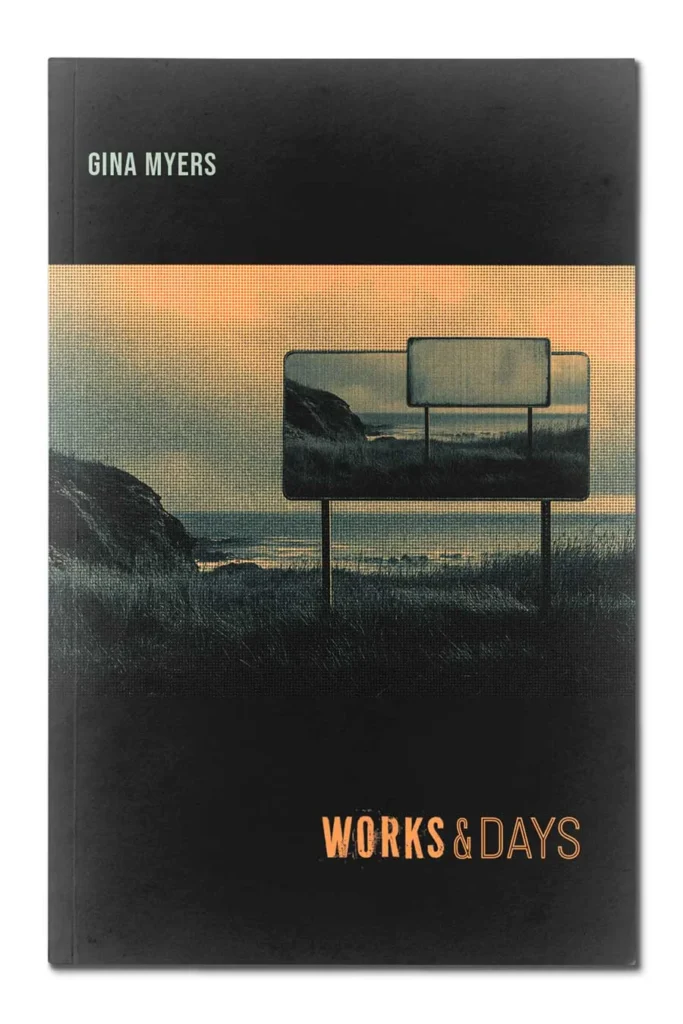
Myers’ book offers glimmers of hope and optimism as well (including one of my favorite standalone lines of last year: “You don’t have to read like a cop”). But it is not imbued with any cuteness whatsoever. Myers maintains the unadorned tone throughout, and I appreciate this, as I think cuteness would detract from the work’s prescription, which is roughly this: imagine a better relationship between yourself and capital, and that will allow you to imagine a better life. “If our society were centered on care / Rather than exploitation / It would be fine for technology to take our jobs”—we wouldn’t be so afraid if we didn’t have to hold on for dear life for the little that we’ve got. This work is fed up, but anger gives it its momentum, as Myers declared it would from the beginning.
I Was Working by Ariel Yelen is, by contrast, more lyric, focusing sometimes on moments of beauty. The book, like Myers’, is not about a specific job but about the continuity of work. The book opens on the titular poem, which is a thought experiment about what work does to a person. The narrator quits all the pleasures in their life—social, food-related—in exchange for two, three, four jobs:
It wasn’t the more jobs I had
the more money I made. It was
the more jobs I had, the more
I could work.
The optimization is never-ending. The poem closes (with no end punctuation) as follows: “Meanwhile, new / platforms continued / to make themselves available”. There is no point at which satisfaction is reached in this kind of relentless hunger for more work, because one could always be more optimized and work more. Of course nobody is getting four jobs for the pleasure of working; if they are doing this, it is to survive. But whether we’re talking about entry-level publishing hires eating sad desk salads, or engineers at Google taking a respite inside of a nap pod, what’s being asked of us by capitalism is optimization for the sake of moneymaking. Work is continuous, and if we do not put boundaries between the self and the work the self does, if we don’t separate our identities, then we will find ourselves drifting in this direction. This is what Yelen is getting at with the opening poem, though she is clearly reluctant to prescribe a course of action in response. This is not a preachy book.
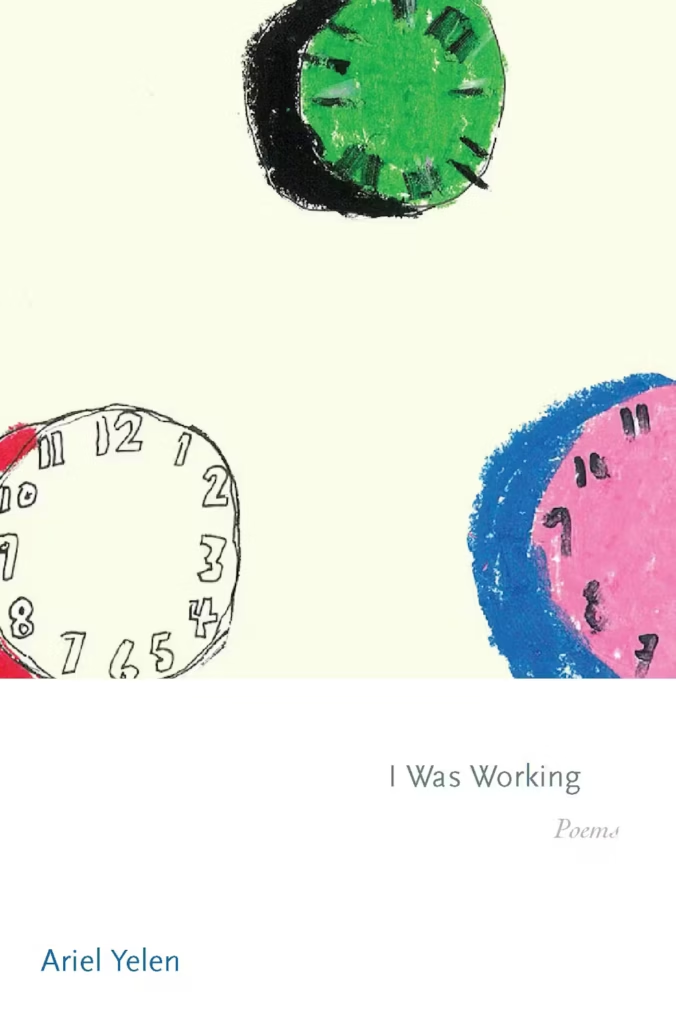
I Was Working features many moments of beauty and pleasure even within the context of the workplace. Consider the poem called “Revolution,” which observes a microwave as it beeps its little lunch song:
The new microwave at work has begun
To make the most beautiful sound as it finishes cooking
[…]
I’ve begun singing the alto part in harmony with it when it plays
And I’ve been adding a note, the minor third
Before dropping to the lower fifth
To finish the song in unison
Music under most circumstances
Will take desperate
Measures to come back into your life
For the poet it is not possible to optimize out all joy; even in this work scenario, their power of observation provides a momentary respite (putting this book also in conversation with Bernadette Mayer). Later in the book, Yelen’s narrator creates layers of separation between the real self and the office self: “The view from the office so stunning it’s propaganda / Character named ‘I’ makes a face like wow”. The office encourages us to bring our “whole selves” to work—I’ve worked in many places where the narrative from HR is that we should be free to be ourselves at work—but when has that ever been anything but an exercise in optimization? Isn’t it better to keep the self for the self? This poem seems to think so.
The book also accounts for “free time” as in the time spent not working:
[T]o be able to love each other requires that we not
stay together in physical space, but rather disappear
from one another daily to construct a kind of something
that allows us to, in free time, love one another.
Even in the endeavor of loving another person, work is there. We need to work to enable the pleasures in our lives. Yelen’s book doesn’t seem as furious as Myers’ about this notion, but it is there nevertheless. “This creation casts a curfew, but we must keep building, or nothing / will be built.” The language is mysterious, epic, but what we are talking about is the mundane necessity of work. The book’s middle section, titled “Free Time,” is comprised of short poetic bursts written in the moments between work (lunchbreaks, commutes and such). The poems, titleless and compressed, represent the attention span we are capable of while we are not working. “Check my phone to see / Boss sent an email.” Even in our free time, work is present.
In an interview at Cleveland Review of Books, Yelen says: “If working a job structures my day, my time, (as it does for most people), and if I attempt to fit the writing of poems into the day, then yes, there’s probably a good chance the poems—the objects, syntax, rhythms—will be influenced or slightly warped by this clock…the poems might be job-shaped”. To take it further, by talking about jobs, you are talking about money implicitly or explicitly, and the metaphors of capitalism enter, the analogies of owing and debt: “I think I owe my boss a hello / I think I owe him a turkey sandwich”.
The book also makes some interesting juxtapositions between nature and economic language. In a poem called “Prayer for tax season,” Yelen writes:
May I work and
be paid despite
poor ergonomics
and poor
economic policy
May I pay my taxes
with the ease of one thousand
cherry blossoms raining
down […]
Money has simply become intrinsic, and the desire is for currency to flow with the ease of forces in the natural world. “When you’re money-low,” she later writes, “You might look down at the grass / Wonder how do I get the gig / Of just growing.” In other words, how do you get to just be? There’s a sonnet crown called “Tide’s Out (of Money)” that maximizes the trick of juxtaposing nature against economic metaphor.
Rosehip invested, violet from spending
Maroon-washed seagrass capitalizing
They say the dollar’s Seagullian in thought
They say barnacled but good investment
And so forth—nearly every line has a natural element alongside a metaphor of capital, because money and work are just so damn natural these days. Because we’ve spent our lives working so much, so hard, for money, that it almost seems part of the grand design. Yelen’s book ends on a notion that “it’s possible / you’re carrying something / for no reason, but that to put it down / would be to change your life” —it’s not quite Rilke’s directive, but it’s hinting at something similar to what Myers’ book is: that something different may be possible than the system we’ve been not-quite-brainwashed to accept.
Rosalie Moffett’s Making a Living riffs on the natural-economic relationship as well. The book is different from the other two in that it’s about the narrator’s trying to become pregnant and have a baby—the making of a literal living. But with that title, how could I not include it in this analysis? And lo, I begin to read and find the economic metaphor there throughout. Immediately in the opening poem, we have natural landscape against the depressing visage of the chain discount store:
Cold morning, unadorned.
The Dollar General employees
at work in their carbon
footprint nightmare.
Right away, the image references capitalism. The dollar store is a potent symbol: the stores are so ubiquitous in the American landscape in part because they focus on rural and underserved areas while at the same time pushing out grocers and small businesses with their low operating costs and creating or maintaining food deserts. With this opening image, Moffett tells us we are in America in this particular era, and we think about money as much as we think about anything in nature. She does this again soon: in a poem titled “Forsythia” she writes:
[Forsythia] will forever remind me
of my mother stealing
branches of it outside the DoubleTree Inn
in Murfreesboro, Tennessee
for her mother’s funeral.
The poem’s title is floral, but Moffett dives into the language of economy to give it meaning. For Moffett’s narrator, this act of thievery to create beauty is a legacy: by the poem’s end, she is imagining her own future child watching her “scavenge / the landscape for bits of beauty” and learning to do it herself.
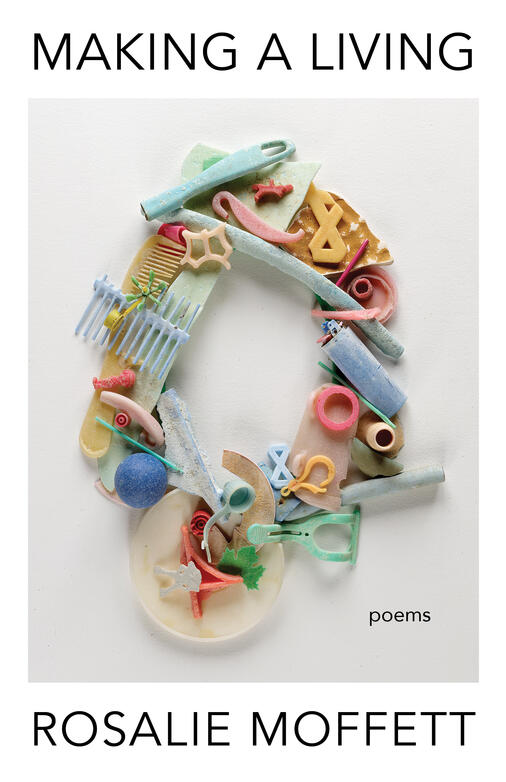
Later she does this move again, employing interesting rhyme effects to piece together the natural and economic worlds.
April and the yellow tulips elbow up
from their bed, faithful undead. Their even ranks
take over bank lawns and medians. As for me,
in this economy, I cultivate my aboveground
demeanor in order to find and retain employment,
something else bulking up at my root.
{Yellow, elbow}, {bed, undead}, {ranks, banks}, {me, economy}: if we follow the flow of the poetry, we notice no rift in the transition from tulips to economics. Later in the same poem, she even brings in the idea of the generation:
My generation, like a dropped jar
of ball bearings, lodged in the dark
cracks of the country’s uneven floor. Where the job is
or was.
Like Yelen, Moffett uses the metaphor of the boss.
Calling god the Man
Upstairs makes god a boss, his office like all boss offices,
beyond reach, from which he chomps a cigar, orders
a new cumulonimbus […]
Here, god is in charge of the decision of whether or not to allow life to be made—whether we are making a living. But if he is our boss, does that mean he is paying us? What do we give over in exchange for the pay? The project of our lives? In a poem about buying pregnancy tests, we consider first the cost of the fancier Clearblue ones, and then walk home with the narrator as she thinks about what this could mean:
I could already feel a new kind of love
using me
to calculate
an unfathomable sum.
Love itself, enumerated. Of course this is not by itself a metaphor of economics, but alongside everything else it can easily be read as one. “Those who don’t / study the natural world inhabit something / they barely grasp” she writes later on. The same can be true for the economic world.
In order to exist, capitalism needs us to have problems. To write about those problems is to write about money. The days where money was not a topic for poetry are behind us; were Robert Frost a millennial poet in the 2020s, he might wonder about the hospital bill after slipping and falling while bending birch trees. As the system extracts more from us, and as it asks for more and more minutes from our day, it’s impossible to not turn the poetic imagination toward its machinations. Of course it is not new to write about work, but millennial poets grew into their poetic selves from a place of systemic economic pessimism, and as a result these books of poetry hone in on the structures of work and capital as material not out of some sense of novelty but because it is simply such a huge part of life. The contraption of capitalism may be invisible, but its symptoms are not; a poetics about living with these symptoms is emerging, and I love to see it.
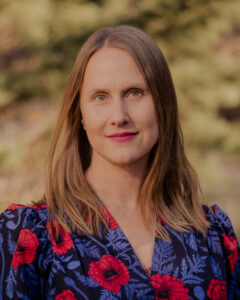 Niina Pollari is the author of two poetry collections: Path of Totality (Soft Skull, 2022) and Dead Horse (Birds, LLC, 2015), and the translator, from the Finnish, of Tytti Heikkinen’s selected poems, The Warmth of the Taxidermied Animal. Her next book, Risk Tolerance, will come out with Autofocus Books in February 2027. She also sometimes edits reviews for Zona Motel. She lives in Marshall, NC with her family, and she is currently reading some works in translation: Even Time Bleeds: Selected Poems by Jeannette L. Clariond (tr. Forrest Gander) and Inventarium by Pedro Carmona-Alvarez (tr. Gabriel Gudding).